How AI is Reshaping Post-Entry Audits for Proactive Trade Compliance
At BITE, we regularly hear the same challenge from brokers and importers: compliance data exists everywhere, but rarely in one place. ACE reports, spreadsheets, HTS classifications, tariff updates, PGA requirements, and product databases are often disconnected, making post-entry audits time-consuming and reactive.
That was the focus of our recent webinar with Spencer Strader, Co-founder and President of Trade Xcelerators (TXC), where we discussed with BITE's Anne Riitho how AI and connected trade data can strengthen post-entry compliance. [webinar recording]
One message stood out clearly: Post-entry audits should not just identify mistakes — they should directly improve future compliance.
Targeting High-Risk Transactions: Prioritizing What Matters Most in Audits
Compliance teams today are overwhelmed by transaction volume. When processing hundreds or thousands of entries each month, manually reviewing every entry is unrealistic.
Instead, teams need a way to quickly identify high-risk transactions. Spencer noted that he targets high-complexity entries first:
> "Show me the stuff that's on fire first… I don't need to scan through 50 entries to find three that are on fire."
Examples of high-risk indicators include:
- Missing Chapter 99 codes
- Section 232 tariff exposure
- PGA discrepancies
- HTS inconsistencies
- New products without classification history
AI-assisted workflows can help teams surface these issues faster, addressing risks going forward while allowing compliance professionals to focus their expertise where it matters most.
Moving From Reactive to Proactive Compliance
While recognized as a best practice, post-entry audits may not happen as regularly as they should be.
But modern compliance programs are shifting toward continuous improvement.
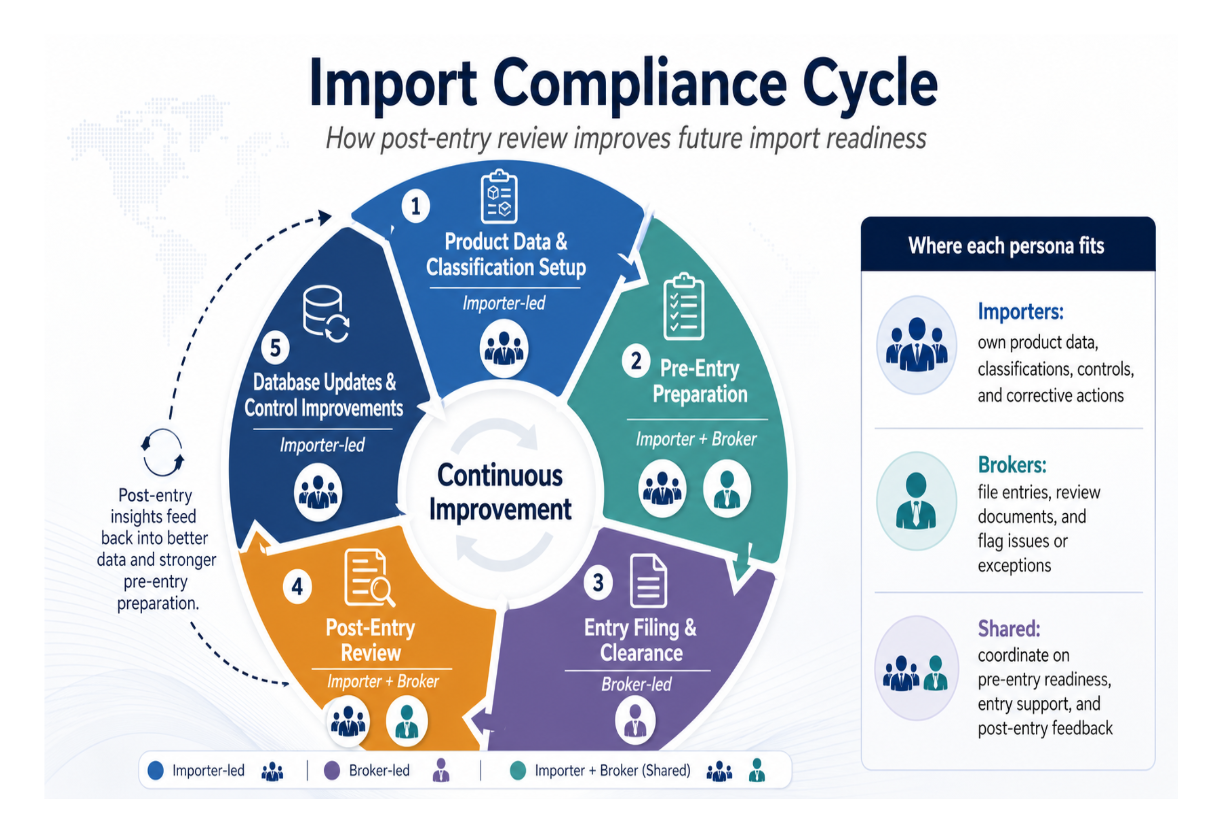
At BITE, we view compliance as a cycle:
1. Product Data & Classification Setup 2. Pre-Entry Preparation 3. Entry Filing & Clearance 4. Post-Entry Review 5. Database updates and control improvements
Every audit finding can and should improve the next entry.
If a classification was incorrect, update the product database. If tariff applicability changed, synchronize it across teams. If a PGA requirement was missed, document it for future shipments.
The goal is simple: make compliance smarter over time.
The Role of AI in Trade Compliance
At BITE, we believe AI should enhance expert decision-making — not replace it.
Trade compliance still requires human judgment, accountability, and regulatory expertise.
AI isn't meant to replace the expert; it's designed to supercharge them. It frees up compliance teams to focus their judgment where it matters by quickly analyzing large datasets, surfacing anomalies, prioritizing risk, and automating repetitive audit work.
The human remains in the loop.
Compliance professionals still make the final decisions, but AI allows them to spend less time searching for issues and more time solving them.
The Future of Compliance: Smarter Workflows, Lower Risk
Post-entry audits are evolving from manual reviews into strategic compliance tools.
Organizations that modernize their workflows will be better positioned to:
- Reduce downstream risk
- Improve audit readiness
- Increase operational efficiency
- Respond faster to regulatory change
We believe the next phase of trade compliance isn't just about being automated — it's about being strategically smarter.
At BITE, we're focused on helping you build connected, collaborative, and proactive operations to get there.
Want to see BITE in action?